
"coffee rust resistance"
400 article(s) found

Introduction to the regional treatment method of coffee bean species, characteristics, flavor, taste and manor production
Coffee bean species knowledge, flavor, taste, manor production, regional treatment of all coffee, Arabica coffee accounts for 75%, 80%, its excellent flavor and aroma, making it the only coffee that can be drunk directly among these native species. However, it has low resistance to dryness, frost, diseases and insect pests, especially the natural enemy of coffee, leaf rust, so all producing countries are working hard.
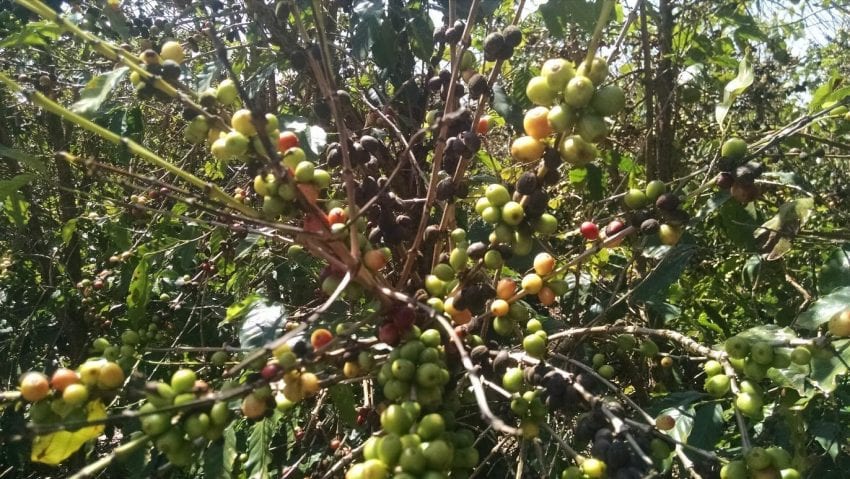
How to monitor and prevent coffee leaf rust? what is coffee leaf rust? What are the hazards of leaf rust
Professional coffee knowledge exchange more information about coffee beans Please follow the coffee workshop (Wechat official account cafe_style) anyone engaged in coffee production may be familiar with the harm of coffee leaf rust. In recent years, devastating outbreaks of this fungus have often made headlines. According to the World Coffee Research report, an outbreak of leaf rust swept through Central America during the 2011 harvest season in Greater 2012.

Prevention and control of coffee rust is the main disease of coffee.
1. Coffee rust is the main disease of coffee, the most harmful, the damaged plants, light reduced yield, serious death. Coffee rust is mainly harmful to leaves and sometimes to young fruits and twigs. After the leaves were infected, many light yellow spots appeared at first and enlarged in the form of water stains, followed by orange-yellow powdery spores on the back of the leaves, and there was a light green halo around the disease spots, which gradually expanded or connected in the later stage.

Control of Coffee Rust and Coffee anthracnose by Coffee Diseases
1. Coffee rust is the main disease of coffee, the most harmful, the damaged plants, light reduced yield, serious death. Coffee rust is mainly harmful to leaves and sometimes to young fruits and twigs. After the leaves were infected, many light yellow spots appeared at first and enlarged in the form of water stains, followed by orange-yellow powdery spores on the back of the leaves, and there was a light green halo around the disease spots, which gradually expanded or connected in the later stage.

Coffee cold knowledge: bean seed knowledge-Catimor and Lempira Katim coffee beans are bad?
Professional coffee knowledge exchange more coffee bean information please follow Coffee Workshop (Wechat official account cafe_style) Katim Coffee Bean _ Yunnan Katim Coffee Bean (Catimor), 1/4 of Luodou pedigree, is a cross between Kaddura (Arabica) and Timor (original sound of Timor), a natural hybrid found in East Timor. Indonesia
Coffee leaf rust symptoms robusta coffee bean characteristics what is Arabica
Explanation of the nouns of raw coffee beans (Arabica v.s. Robusta): coffee tree, evergreen tree of Rubiaceae, Rubiaceae has many medicinal plants, such as quinine, Dugan and so on. Most coffee trees on earth are planted in the highlands between the Tropic of Cancer and the Tropic of Cancer, so this area is also known as the "coffee belt". The coffee beans we use to brew coffee are the seeds in the fruit of the coffee tree.
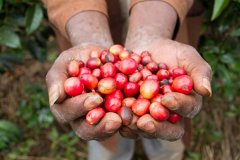
Three native species of coffee: Arabica, Robusta and Liberia
Coffee belongs to the evergreen shrub of the genus Rubiaceae, which is centered in the tropics. There are about 6000 species of Rubiaceae belonging to 500 genera. Coffee has always been considered to have certain effects, such as invigorating the stomach, waking up the brain, stopping bleeding, dissipating heat, strengthening the body and so on. There are about 40 species of coffee plants, but the only ones that can produce coffee beans of commercial value are Arabica, Robusta and Libby.

Beans are divided by seed, RUIRU 11
Professional coffee knowledge exchange more coffee bean information please follow the coffee workshop (Wechat official account cafe_style) Lulu Yilu (RUIRU) 11 high-yielding dwarf hybrid varieties resistant to leaf rust and berry disease. Released in Kenya. Ruiru 11 is a compact and high-yielding variety cultivated in Kenya that allows for higher density and reduces losses caused by diseases and insect pests. nineteen

Honduran Coffee Variety Introduction Honduran Coffee Bean Flavor New Generation Fruit Flavor
Professional coffee knowledge exchange More coffee bean information Please pay attention to coffee workshop (Weixin Official Accounts cafe_style) Front Street-Honduras coffee cultivation in Honduras, the earliest can be traced back to 1804, from Costa Rica to Honduras Olancho region, most of the cultivation by the Spanish colonists at that time owned, Honduras after independence, several consecutive terms
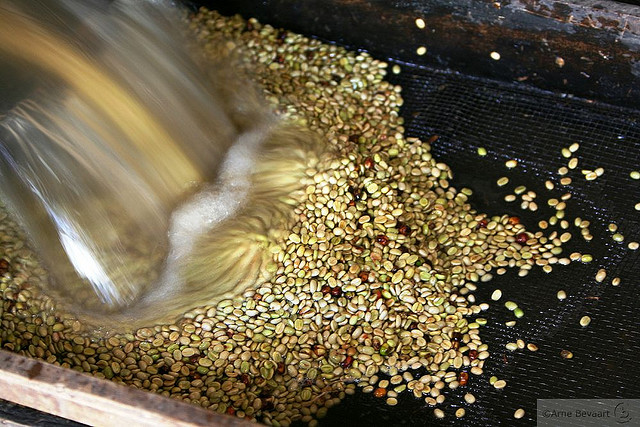
Colombian coffee bean Arabica seed Dikapunkadullah Mondo Dono Wokadu Amarago
Arabica coffee is generally considered to be originated from the Ethiopian plateau, widely distributed in the tropics, after repeated mutation and breeding, derived a lot of varieties. Tibica: this is the closest Arabica species to the native species. Almost all Arabica varieties are derived from this. It is long in bean shape, has excellent aroma and sour taste, but is not resistant to leaf rust.

The three native species of coffee, the main varieties of Colombian coffee.
Varieties resistant to leaf rust found in Congo, Africa, teach Arabica species to be more resistant to the disease. People like to compare the robusta species to the Arabica species of coffee. In fact, the robusta species was originally a mutant of the Congolese species (scientific name Cofffea canephora), so it is the Congolese species that should be compared with the Arabica species. To this day, however, Robusta species

Introduction to the flavor and taste of Arabica coffee manor in Indonesia
Varieties resistant to leaf rust found in Congo, Africa, teach Arabica species to be more resistant to the disease. People like to compare the robusta species to the Arabica species of coffee. In fact, the robusta species was originally a mutant of the Congolese species (scientific name Cofffea canephora), so it is the Congolese species that should be compared with the Arabica species. To this day, however, Robusta species
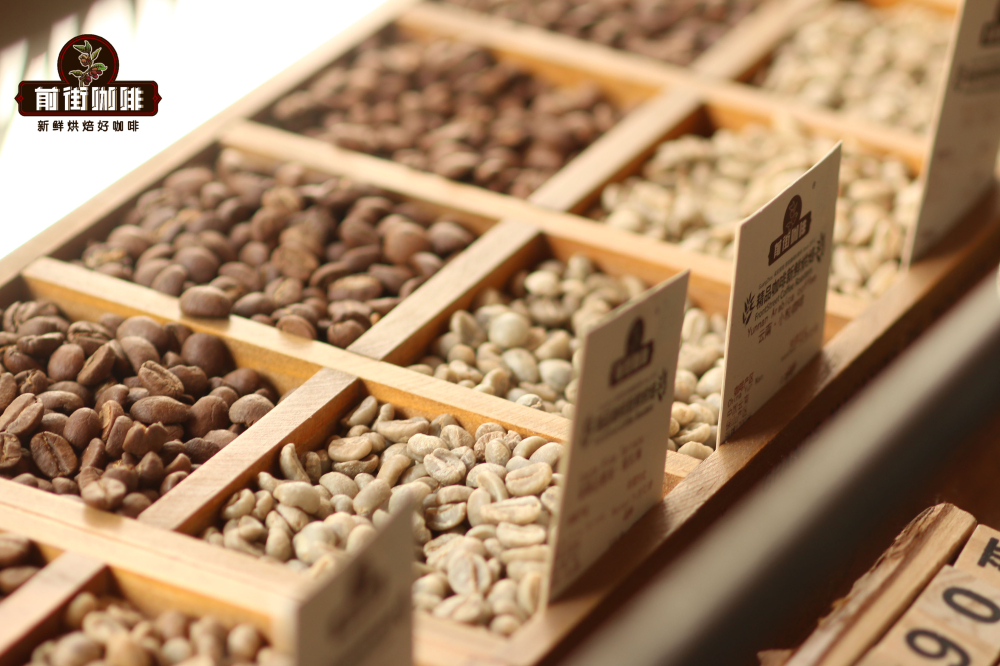
Do Katim Coffee beans belong to Arabica? are the characteristics of Yunnan Katim coffee varieties delicious?
Professional coffee knowledge exchange more coffee bean information please follow the coffee workshop (Wechat official account cafe_style) front street-Yunnan coffee introduction scientists pointed out that the coffee genus contains 103 coffee native species (coffee species), of which can be artificially grown and produce coffee beans, and has a huge commercial price
Introduction of Anaka 14Anacafe-14 Coffee Bean study on adaptability of New Coffee Variety
Anaka 14 in 1981, Mr. FranciscoMancham, a producer in the Chiquimula coffee district of Camotn, established a small piece of coffee variety Catimor, brown buds, near the Pacamara plant. Through natural hybridization, we have naturally obtained plants with the characteristics of high vitality, high yield and large grain size. After several selection cycles of more than 30 years, we get

What kinds of coffee do you have? What do the varieties and cultivars represent? Which coffee variety has the best quality?
Professional coffee knowledge exchange more coffee bean information please follow the coffee workshop (Wechat official account cafe_style)
Selection of basic Coffee Tree Classification
Arabica Coffee and Variety improvement. What do the so-called families, genera and species of Arabica species mean in biological classification? In terms of biological classification, it is divided into boundary, phylum, class, order, family, genus and species from top to bottom, and the lower part of the species is subdivided into subspecies, varieties and varieties. Arabica coffee is generally thought to originate from the Ethiopian plateau and is widely divided.

Arabica beans-- A family "genealogy" like rising day and moon
Arabica, (scientific name Coffea arabica, Coffee Arabica), also known as Arabica coffee, is an indigenous species of coffee grown on the Abyssinia Plateau of Ethiopia (present-day Ethiopian Plateau). According to textual research, it is the first artificially cultivated coffee variety in the world, one of the most important coffee tree species, and occupies the global coffee.
Prevention and control of small-grain coffee diseases (coffee rust, coffee anthracnose)
1. Coffee rust is the main disease of coffee, the most harmful, the damaged plants, light reduced yield, serious death. Coffee rust is mainly harmful to leaves and sometimes to young fruits and twigs. After the leaves were infected, many light yellow spots appeared at first and enlarged in the form of water stains, followed by orange-yellow powdery spores on the back of the leaves, and there was a light green halo around the disease spots, which gradually expanded or connected in the later stage.

[Katim] the planting history of the variety? Are Yunnan Katim coffee beans delicious? What are the advantages and disadvantages?
Professional coffee knowledge exchange more coffee bean information please follow the coffee workshop (Wechat official account cafe_style) [Katim] the planting history of varieties? Are Yunnan Katim coffee beans delicious? What are the advantages and disadvantages? How to cook it? Most of the plants in Yunnan are now Katim, which is the bourbon branch of the Arabica species, Kaddura and Robusta.

Research results of the World Coffee Science Conference: long-term consumption of coffee is good for health
In the field of coffee chemistry, the research results of experts from various countries show that different processing methods and storage conditions have effects on the microbial and chemical composition of coffee. In the process of storage, the temperature of storage is lowered to better ensure the quality of coffee. Professor Pochun Possion, a professor from Switzerland, gave a brief explanation on ensuring the freshness of coffee in the coffee distribution system.